
Strabismus
Price list of servicesStrabismus, also known as squint, is a condition in which one or both eyes deviate from the common line of fixation. The deviation may be constant or appear only in certain situations. Strabismus affects not only the symmetry of the gaze but also how the visual system works and how binocular vision develops or is maintained.
The causes and mechanisms of strabismus vary considerably, so there is no one-size-fits-all treatment. The first step is to determine the type of strabismus, the direction and degree of the deviation, the condition of the eye muscles and the specifics of visual function.
During the consultation, the clinic’s ophthalmic surgeons carry out a diagnostic assessment and decide whether surgery is needed and which technique is best for the particular patient.

-
 Strabismus Surgery
Eye muscle surgery changes the position of the eye when the deviation is persistent and affects vision or appearance. The surgeon decides on the extent of the procedure after an examination.
More details
Before/after results
Strabismus Surgery
-
Eyelid Retraction Repair, Canthoplasty and Strabismus Surgery
-
Strabismus Surgery and Orbital Fat Grafting
-
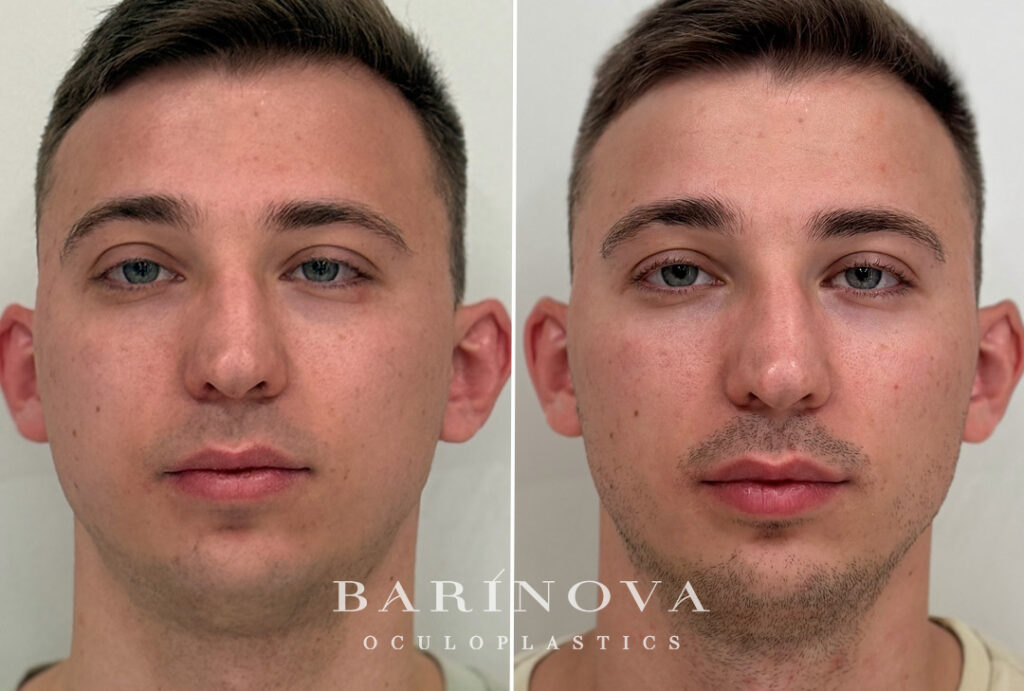

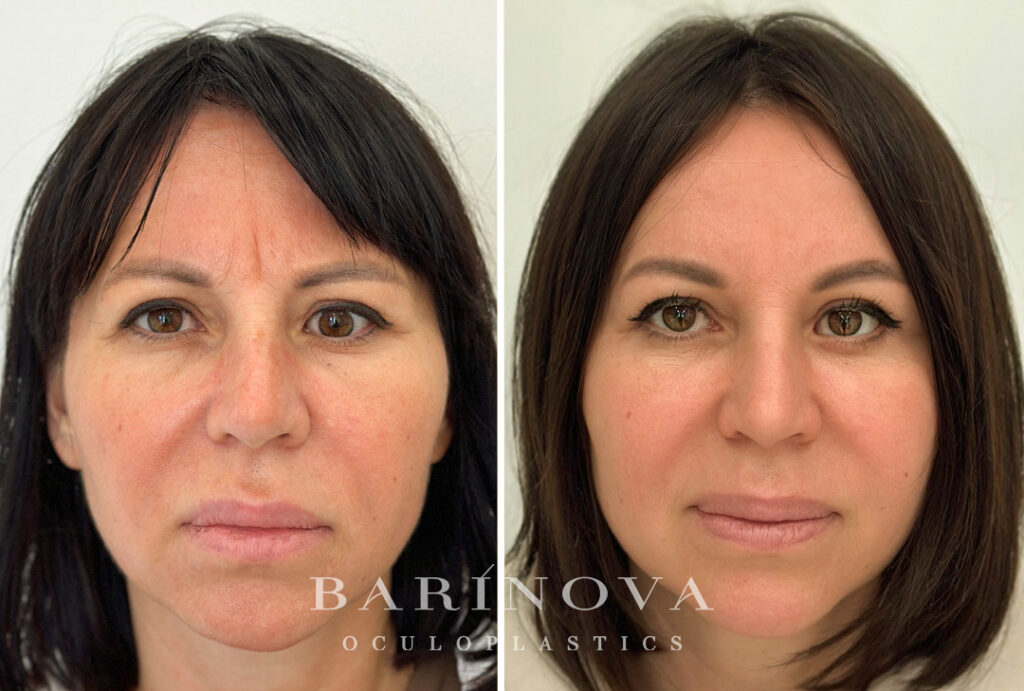
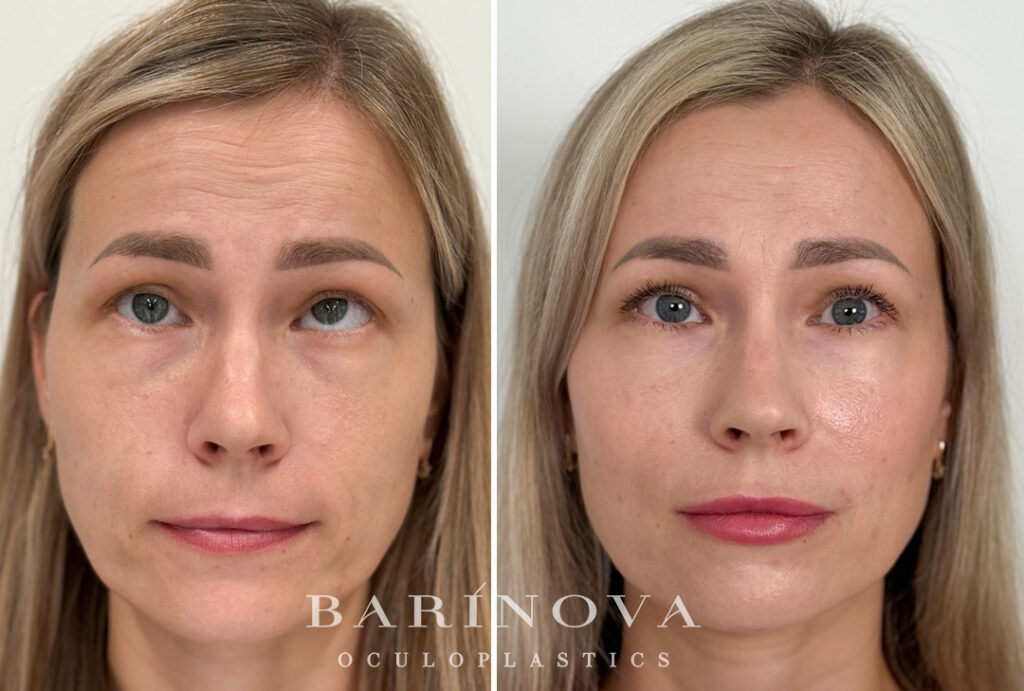
Causes of strabismus
Strabismus can develop for different reasons. In some cases it forms in childhood, in others it appears in adulthood.
Possible causes include:
- refractive errors, such as farsightedness, nearsightedness or astigmatism;
- impaired function and coordination of the eye muscles;
- features of visual system development in childhood;
- hereditary predisposition;
- injuries to the eye or orbit;
- diseases of the nervous system;
- conditions affecting eyeball mobility;
- consequences of previous surgery or other eye diseases.
Sometimes the cause of strabismus is obvious, while in other cases additional tests are needed to identify it. That is why strabismus correction starts with a diagnostic examination rather than with choosing a surgery.
Symptoms to watch for
The main sign of strabismus is a visible deviation of one eye from the direction in which the other eye is looking. However, symptoms vary depending on age and the type of strabismus.
It is worth seeing an ophthalmologist if you notice:
- a visible deviation of one or both eyes;
- double vision;
- difficulty focusing;
- a habitual head tilt or turn to see better;
- quick eye fatigue;
- frequent squinting;
- difficulty judging distance or with spatial perception;
- a noticeable eye asymmetry that persists or gets worse.
In children, even a small or intermittent eye deviation needs an ophthalmologist’s attention, because the visual system is still developing at an early age.
How the approach differs for adults and children
The patient’s age matters for diagnosis and treatment planning. Strabismus in children needs especially early assessment, because misaligned eyes can affect the development of binocular vision.
Strabismus treatment in children
In childhood it is important to identify the cause and type of strabismus as early as possible. The approach may differ depending on the diagnosis and the child’s visual system. If non-surgical treatment or specialised paediatric follow-up is needed, the child may be referred to a paediatric ophthalmologist.
Surgery is considered only when indicated and at an age determined by the doctor after examination.
Strabismus treatment in adults
In adults, strabismus may result from childhood strabismus, injury, eye muscle dysfunction, neurological causes or other diseases. Besides the aesthetic asymmetry, patients may be bothered by double vision, impaired spatial perception or a compensatory head tilt.
In certain cases, surgical correction of eye position is used to treat strabismus in adults. The need for surgery and its extent are determined after a detailed examination.
Strabismus surgery
Strabismus surgery aims to change the position of the eyeball by adjusting how individual eye muscles work. Depending on the type and degree of deviation, the surgeon may weaken or strengthen a muscle, or change where it attaches.
In some cases correcting one muscle is enough, in others several muscles need to be addressed to achieve the right eye position. The number and type of procedures are not based on a standard scheme but on the specific nature of the strabismus.
Surgical correction may be considered for persistent eye deviation if it causes functional or aesthetic problems and, after examination, the doctor finds surgery to be an appropriate treatment.
Before surgery, eye position, eye movements and the features of the strabismus are assessed in detail. The doctor then draws up an individual surgical plan.
Contraindications and limitations
Whether surgery is possible is decided individually. Possible temporary or absolute limitations include:
- acute inflammatory or infectious eye diseases;
- flare-ups of certain systemic diseases;
- conditions that may increase the risks of surgery or anaesthesia;
- the need to first diagnose and treat the underlying disease that caused the strabismus;
- for children, age and visual system development, as assessed by the doctor.
The final decision on whether surgery is possible, its timing and technique is made by the doctor after examination and the necessary tests.
Consultation and diagnosis
The first stage of strabismus treatment is a detailed consultation. Its purpose is not only to see how noticeable the deviation is but also to establish its type and cause.
- Initial examination. The doctor assesses eye position, symmetry, mobility and the nature of the deviation.
- Type and degree of strabismus. The direction of the deviation is analysed (horizontal, vertical or combined), as well as its size and stability.
- Visual function assessment. If needed, binocular vision, double vision and other functional signs are evaluated.
- Additional tests. If further tests are needed to identify the cause or plan treatment, the doctor lists them.
- Treatment plan. After analysing the data, the doctor decides whether surgery is needed or whether the patient should be referred for another type of eye treatment.
So the method of strabismus correction is chosen not just by how the eyes look but on the basis of a comprehensive assessment of their function and anatomy.
Strabismus treatment cost
The cost of strabismus surgery depends on the complexity of the case and the number of eye muscles that need correction. The doctor determines the exact scope of surgery and its cost after the consultation.
Our doctors
Strabismus treatment at our clinic is led by senior ophthalmic surgeon Anna Barinova and ophthalmic surgeon Yana Kolodenska, both with specialist ophthalmology training and surgical experience with the eye muscles.
With strabismus, it is important to assess not only eye position but also eye movements, visual function and the cause of the deviation. That is why the decision on surgery and the choice of technique are made individually after diagnosis.
Strabismus consultation
If you have noticed eye deviation, double vision, gaze asymmetry or other vision changes, start with a consultation with an ophthalmic surgeon.
Book a consultation to identify the type and cause of the strabismus and find out which correction method suits your case.
Make an appointment
Questions & Answers
Can strabismus be corrected in adulthood?
In many cases strabismus in adults can be corrected surgically. However, whether surgery is possible and what result to expect depend on the type of strabismus, its cause, the condition of the eye muscles and visual function. This can be determined after a consultation and diagnosis.
At what age is it best to operate on strabismus in a child?
There is no single age for all children. The decision depends on the type of strabismus, the degree of deviation, the state of vision and how the child's visual system is developing. That is why the doctor determines the timing of possible surgery individually.
Is strabismus surgery painful?
The surgery is performed under appropriate anaesthesia. The choice of anaesthesia depends on the patient's age, the extent of the procedure and other individual factors.
How long is recovery after surgery?
After surgical correction, eye redness, swelling and discomfort are possible. Recovery time depends on the extent of surgery and how the tissues respond. The doctor gives personal recommendations on care and restrictions after the procedure.
Can strabismus come back after surgery?
A recurrent deviation after surgery is possible, as the outcome depends on the type of strabismus, the condition of the eye muscles, age and other factors. That is why follow-up as recommended by the doctor is important even after successful correction.