Strabismus Surgery
Price list of servicesStrabismus surgery changes the position of the eyeball by adjusting one or more of the muscles that move the eye. The aim is to align the eyes and, where possible, to reduce double vision, ease a compensatory head tilt and give both eyes better conditions to work together.
Surgery is not prescribed on appearance alone. The doctor first determines the type of strabismus, the angle and direction of the deviation, eye mobility and visual function. These findings decide which muscle and which eye the surgeon will operate on.
Strabismus surgery at the clinic is performed by ophthalmic surgeons Anna Barinova and Yana Kolodenska.

When surgery is considered
Surgical correction is discussed when the eye deviation is persistent and does not resolve with glasses or other treatment. Common situations include:
- a noticeable horizontal or vertical deviation that does not go away;
- double vision related to the deviation;
- a habitual head tilt or turn that the patient uses to compensate;
- residual strabismus after childhood treatment or a previous operation;
- strabismus after an injury or illness, once the condition has stabilised.
The doctor makes the final decision after the examination. In some cases surgery is postponed or a different treatment is chosen.
How the surgeon changes the eye position
Each eye is moved by six external muscles. If one of them pulls harder or weaker than it should, the eye turns. The surgeon changes the tension or the attachment point of the muscle. There are three main approaches.
- Recession weakens a muscle. Its attachment is moved back, so it pulls the eye less towards its side.
- Resection or plication strengthens a muscle. It is shortened or folded so that it pulls harder.
- In transposition, part of a muscle is moved to change the direction of its pull. It is used for some paralytic forms of strabismus.
Depending on the case, surgery is done on one eye or both, on one muscle or several. The muscles are usually reached through the conjunctiva, without skin incisions.
Preparing for surgery
Before planning, the surgeon measures the angle of deviation again and checks eye mobility, refraction and binocular function. The accuracy of these measurements determines how the extent of surgery is calculated. If needed, the doctor orders additional tests and general blood work. The type of anaesthesia depends on the patient’s age and the scope of the procedure.
Recovery after surgery
In the first days the eye is usually red, and swelling, watering and a foreign body sensation are possible. The doctor prescribes eye drops and explains which restrictions to follow and for how long. Follow-up visits check the eye position and healing. The final result is not assessed straight away, because the eye position can shift slightly over several weeks.
Possible risks
Like any surgery, strabismus surgery carries risks. The most common is under- or overcorrection, when the deviation is reduced less than planned or changes direction. Temporary double vision sometimes occurs. Inflammation or infection is less common. Some patients need a repeat operation to reach the desired eye position. The doctor explains the risks in your particular case during the consultation.
Cost of surgery
The cost depends on how many muscles need correction and whether one or both eyes are operated on. The price for correcting one muscle is listed in the clinic’s price list, and the exact scope of surgery is set after the consultation.
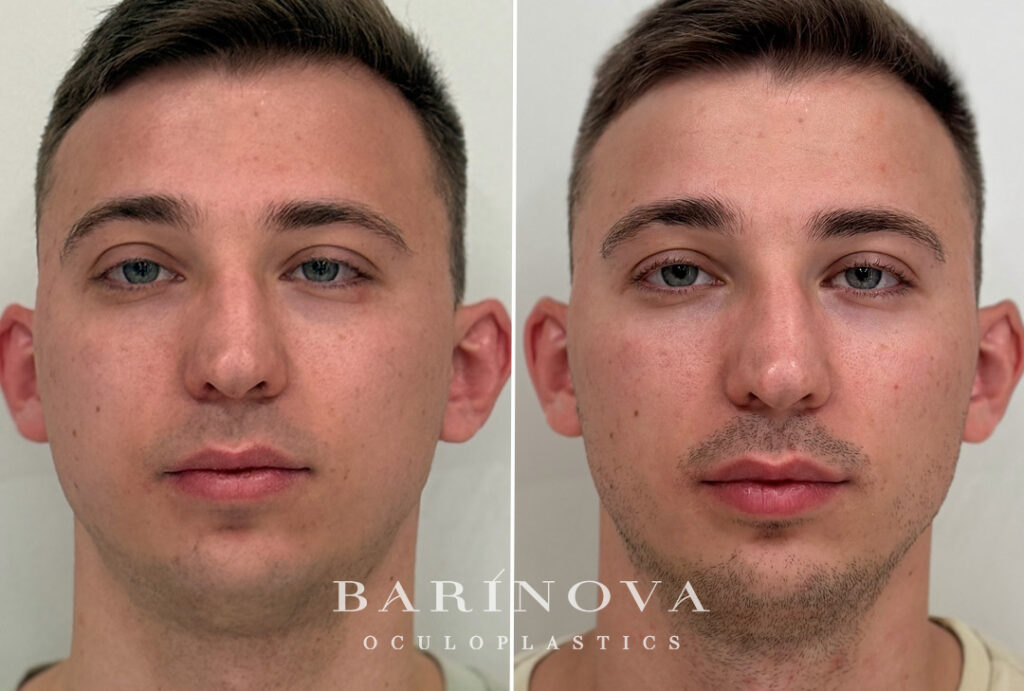
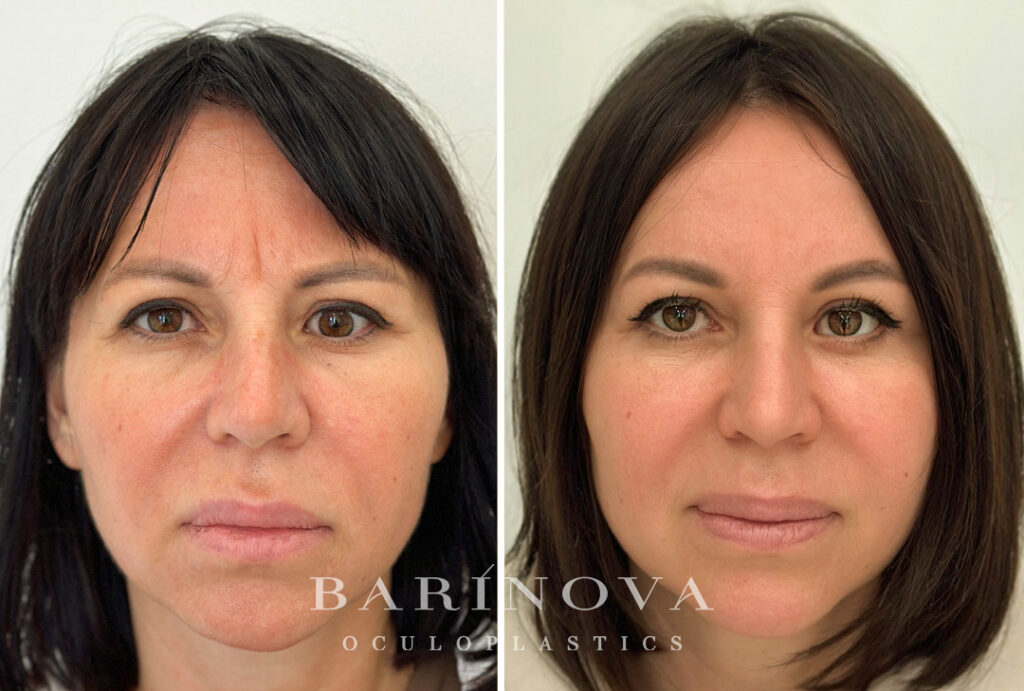
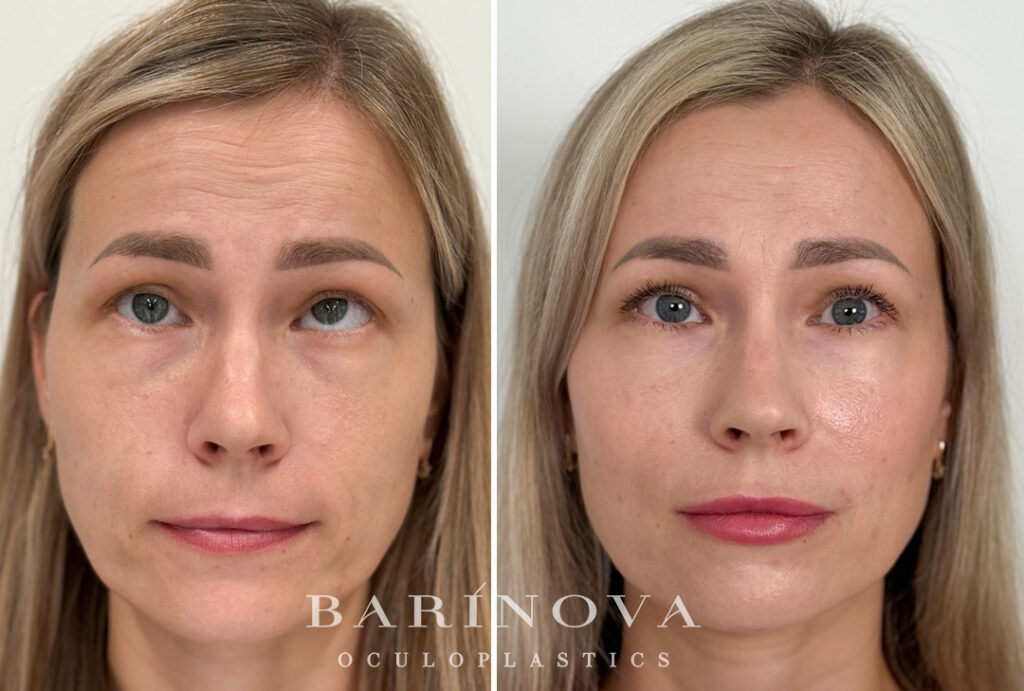
Before/after results
Strabismus Surgery
-
Eyelid Retraction Repair, Canthoplasty and Strabismus Surgery
-
Strabismus Surgery and Orbital Fat Grafting
-

Make an appointment
Questions & Answers
Does strabismus surgery leave scars?
The eye muscles are usually reached through the conjunctiva, so there are no cuts on the skin. Redness at the surgical site fades gradually as it heals.
How many muscles are operated on at once?
It depends on the type and size of the deviation. Sometimes correcting one muscle is enough; in other cases the surgeon works on two or more muscles on one or both eyes. The scope is set based on the examination.
Will I need glasses after surgery?
Surgery changes the position of the eyes but does not correct short-sightedness, long-sightedness or astigmatism. If the patient wore glasses for refractive correction, they are usually still needed after surgery.
When can I return to work and sport?
It varies and depends on the scope of surgery and how healing goes. The doctor explains restrictions on physical activity, swimming and make-up at the follow-up visit.