
Lipofilling
Price list of servicesFacial lipofilling (fat grafting) is a procedure that restores lost facial volume and contours using the patient’s own fat tissue. It corrects volume deficiency in the cheekbones, cheeks, temples, chin and periorbital area, giving the face more harmonious and natural proportions.
Lipofilling is one of the favourite procedures of Dr Anna Barinova and our patients. The patient’s own fat graft is a biocompatible material that can take in the tissues and restore lost volume naturally.
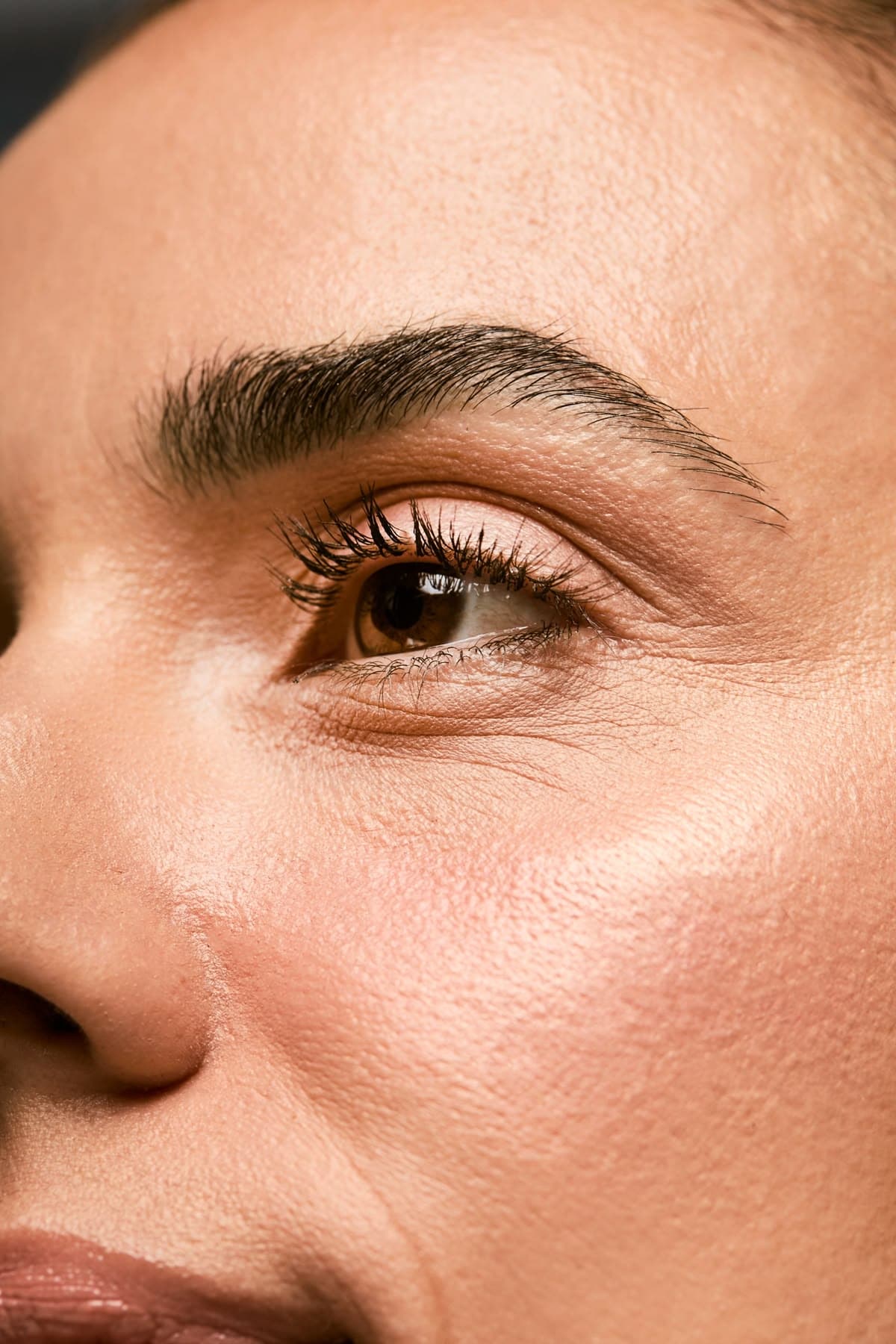
Correction of the periorbital and under-eye area is especially delicate, as even a small change in volume can significantly affect how the eyes look. That is why lipofilling in this area requires a deep understanding of anatomy and precise work with the tissues.
At the clinic, the procedure is performed by oculoplastic surgeons who choose the technique and amount of correction individually, taking into account facial anatomy, tissue condition and the desired result.

Areas treated with lipofilling
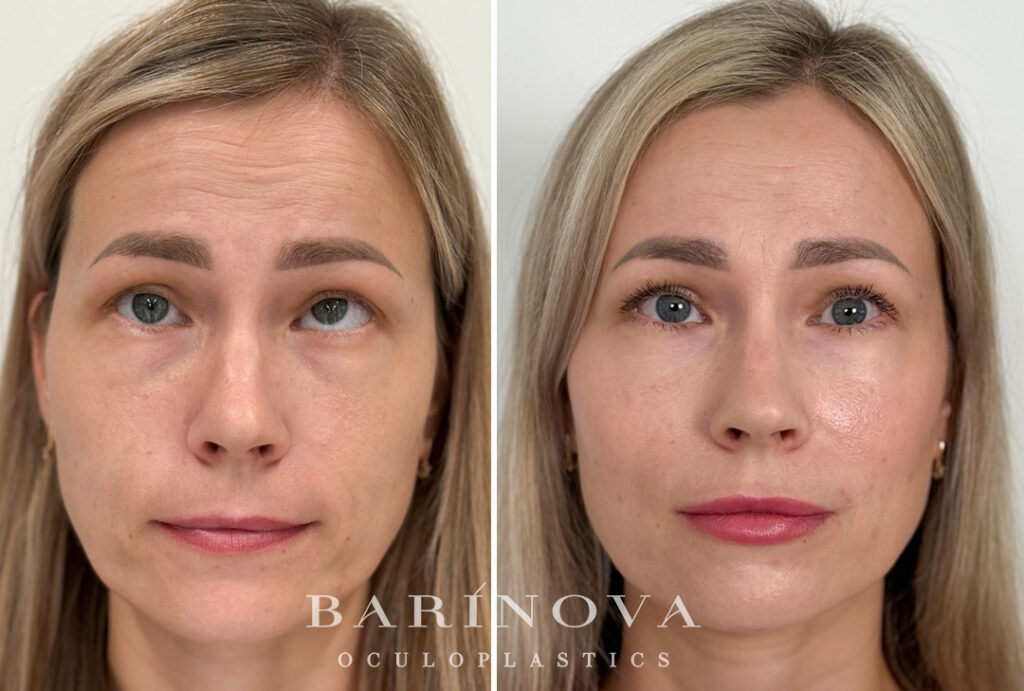
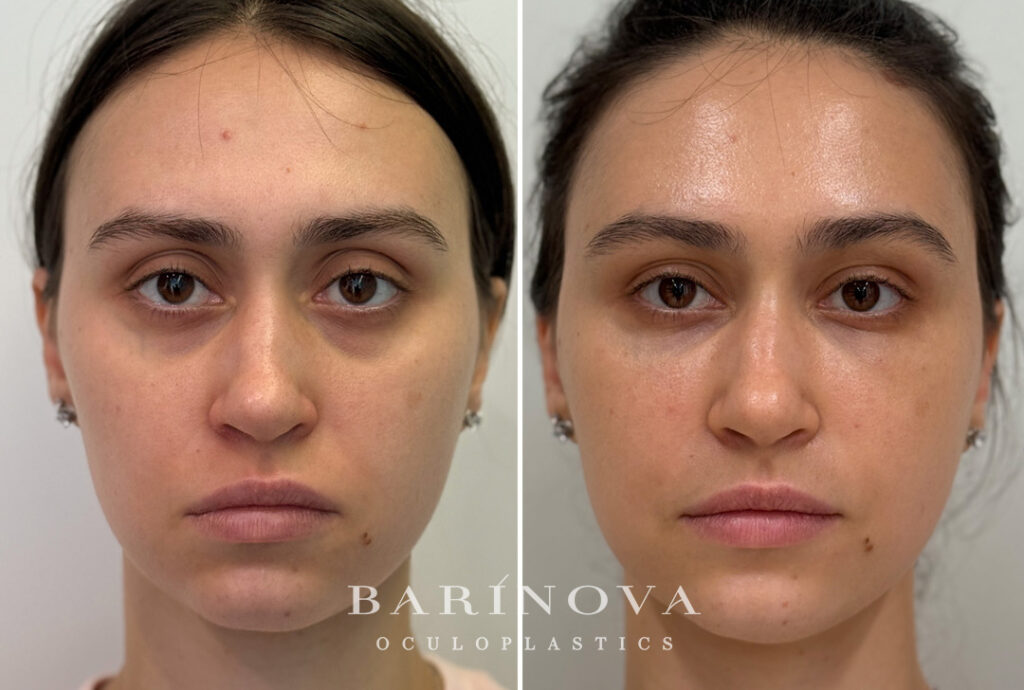
Facial lipofilling with your own fat restores lost volume and corrects individual anatomical areas with respect to facial proportions and features. Under-eye and orbital lipofilling require special precision, as even a small change in volume can affect the expressiveness of the gaze and the apparent size of the eyes.
Lipofilling is most often performed in the following areas:
- The periorbital area and the area around the eyes, to restore volume and visually rejuvenate the face
- Orbital lipofilling, to correct sunken eyes (skeletonisation), tear troughs and a prominent orbital rim.
- The upper and middle face: restoring volume in the temples, cheekbones and cheeks.
- Hand lipofilling: restoring volume and improving hand contours. It may be used for age-related volume loss, marked thinness or uneven contours, helping make the hands look more harmonious and natural.
The amount and technique of lipofilling are chosen individually, depending on anatomy, tissue condition and the area to be corrected.
Indications for lipofilling
Facial lipofilling may be recommended when lost volume needs to be restored, contours corrected or a tissue deficit compensated.
The main indications are:
- Age-related volume loss in the cheekbones, temples and cheeks.
- Hollows under the eyes, tear troughs and a visible orbital rim, one of the most delicate areas for lipofilling.
- Insufficient volume or deformity affecting facial proportions and contour.
- Facial tissue asymmetry related to anatomical features or previous surgery.
- Soft tissue deficit that requires volume restoration with the patient’s own fat.
- The patient’s wish to restore facial volume without synthetic fillers.
At the same time, not every volume loss requires lipofilling. In some cases the problem can be solved by other methods, and sometimes the best option is to combine lipofilling with blepharoplasty or other surgical techniques. The doctor decides on the final approach after assessing anatomy and tissue condition.
Contraindications to lipofilling
The procedure is not performed if there are absolute or temporary contraindications, including:
- pregnancy and breastfeeding;
- acute infectious or inflammatory diseases;
- blood clotting disorders or use of systemic anticoagulants;
- decompensated chronic diseases and uncontrolled diabetes;
- active rashes or skin lesions in the fat harvesting or injection area.
The surgeon assesses whether lipofilling is possible and the extent of the procedure at the preliminary consultation.
How facial lipofilling is performed
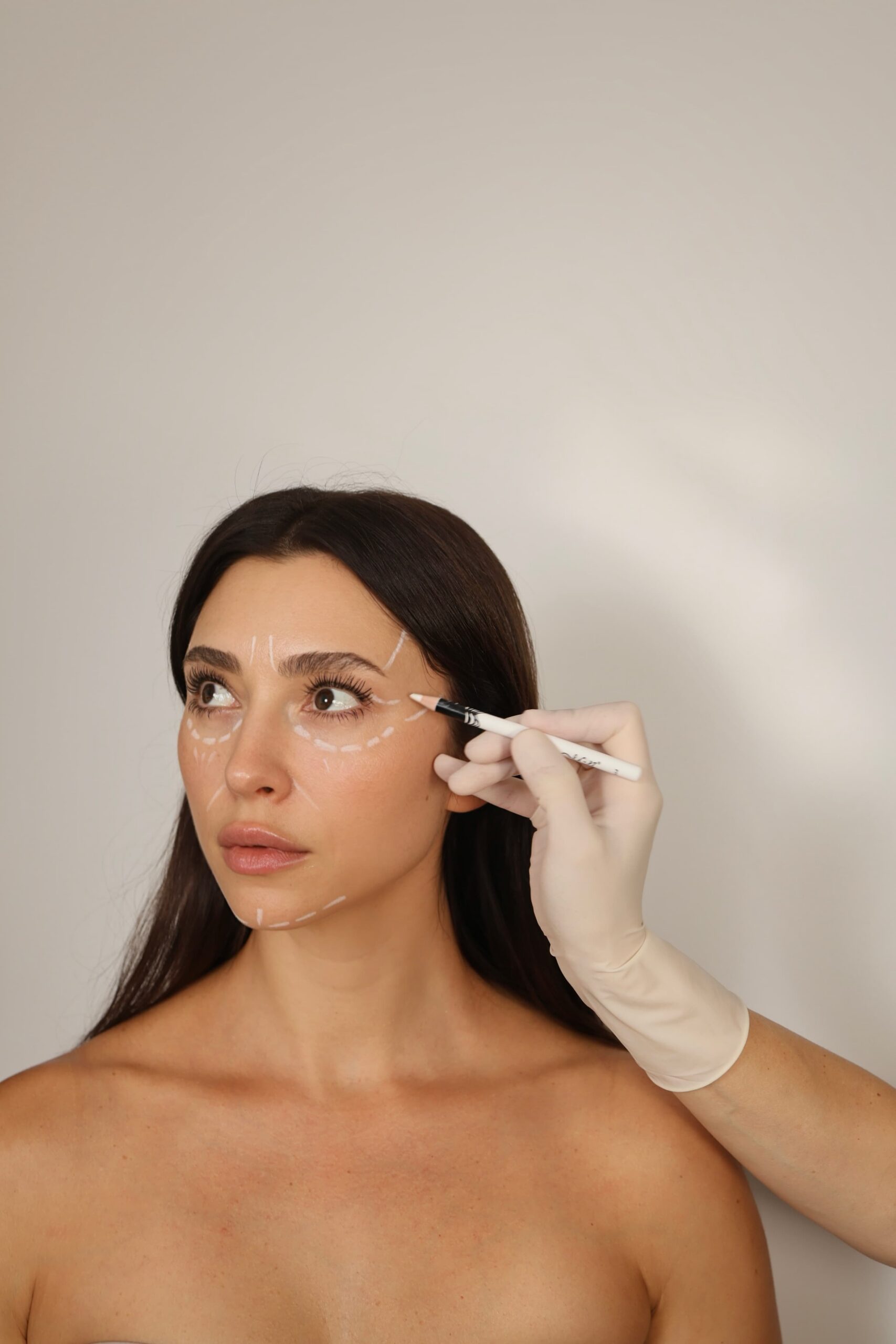
- Consultation and marking. The doctor assesses facial proportions and soft tissue condition and marks the areas for injection and the fat harvesting site. The optimal technique and type of anaesthesia are then chosen.
- Anaesthesia. Depending on the amount and complexity of lipofilling, local or general anaesthesia may be used.
- Fat harvesting. Fat is harvested through a tiny incision from a donor area, most often the abdomen or thighs.
- Graft preparation. The harvested material is processed and cleaned of impurities. The aim is to prepare the fat for precise injection and preserve cell viability.
- Fat injection. The prepared material is injected with very fine cannulas in layers and in micro-droplets. This technique allows precise control over the amount and distribution of fat in the treatment area.
You can see how the procedure is done in this video on the clinic’s Instagram.
Recovery and results after lipofilling
Recovery after facial lipofilling varies from patient to patient. In the first days, swelling and minor bruising are possible both in the injection areas and at the harvesting site.
The main swelling usually subsides gradually over 10–14 days. During this period the volume may change, so the result should not be judged right after the procedure.
After injection, some of the fat cells naturally do not take and are gradually absorbed by the body. The cells that take successfully form a stable volume in the treated area.
The final result of lipofilling is assessed after the main healing and tissue stabilisation are complete, roughly after a few months.
Lipofilling cost
The cost of lipofilling depends on the number and complexity of the treatment areas, the amount of fat needed and the type of anaesthesia.
The final procedure plan and cost are determined after a consultation with the surgeon.
Our doctor
Facial lipofilling, and especially under-eye lipofilling, requires a precise understanding of soft tissue anatomy. The procedure is performed by a specialist oculoplastic surgeon skilled in microsurgical techniques for facial tissues.
Specialisation in the periorbital area is particularly important when working around the eyes. Orbital and under-eye lipofilling requires extremely precise fat placement, as excessive or uneven volume can affect the contour of the lower eyelid and the look of the eyes.
That is why the procedure focuses not only on volume but also on facial anatomy and proportions.
Would you like to restore lost facial volume or correct hollows under the eyes? Book a consultation with an oculoplastic surgeon to find out whether lipofilling is right for you and what amount of correction would be optimal.
Make an appointment
Questions & Answers
How is facial lipofilling different from fillers?
Lipofilling uses the patient's own fat tissue for correction. Unlike synthetic fillers, it is a biocompatible material. Some of the transplanted fat cells take in the treated area and create long-lasting volume.
How long do lipofilling results last?
Fat cells that have taken successfully after lipofilling can remain in the grafted area for many years. At the same time, the result depends on individual factors, weight stability and other factors.
Can lipofilling be combined with blepharoplasty?
Yes. Lipofilling is often combined with blepharoplasty, especially when excess skin or fat pads come together with volume loss in the periorbital area. This combination addresses both excess tissue and volume loss at the same time.
Is lipofilling painful?
The procedure is performed under appropriate anaesthesia, local or general, depending on its extent. The patient should not feel pain during the procedure.
Can lipofilling be done under the eyes only?
Yes, in certain cases under-eye or orbital lipofilling can be performed as a separate procedure. However, the cause of the hollowness must first be determined: volume deficit, excess skin, changes in the fat pads or a combination of factors. The choice of correction method depends on this.
Is lipofilling always needed to correct the under-eye area?
No. If the problem is related not only to volume deficit but, for example, to excess skin or prominent fat pads, blepharoplasty or a combination of techniques may be more appropriate. The surgeon's principle is to identify the cause of the tissue changes and correct it, not just a single symptom.