
Ptosis
Price list of servicesUpper eyelid ptosis is a drooping of the upper eyelid that can affect both the appearance of the eyes and vision. Depending on its degree, ptosis may partly cover the pupil, narrow the visual field, change eye symmetry and make the patient constantly tense the forehead muscles to lift the eyelid.
Surgical treatment of upper eyelid ptosis restores the correct eyelid position, improves the eye opening and, where there are functional problems, widens the visual field. It is important not just to lift the eyelid but to restore its position with respect to muscle function, eye anatomy and facial symmetry.
The surgery is performed by an experienced oculoplastic surgeon, for whom ptosis correction is a functional task as well as an aesthetic one.
Before/after results
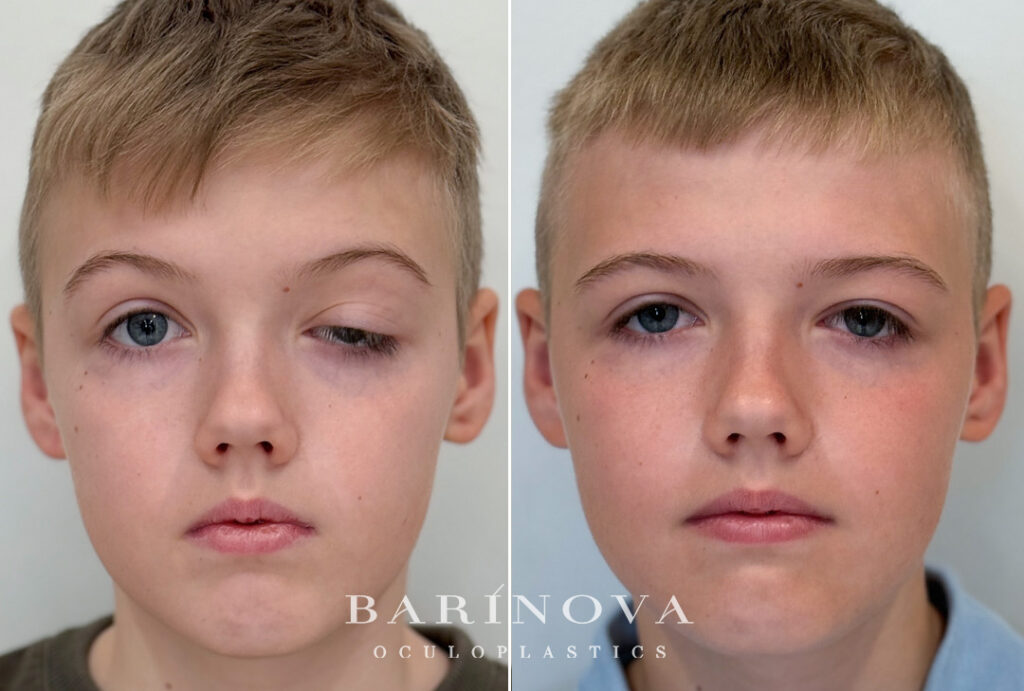
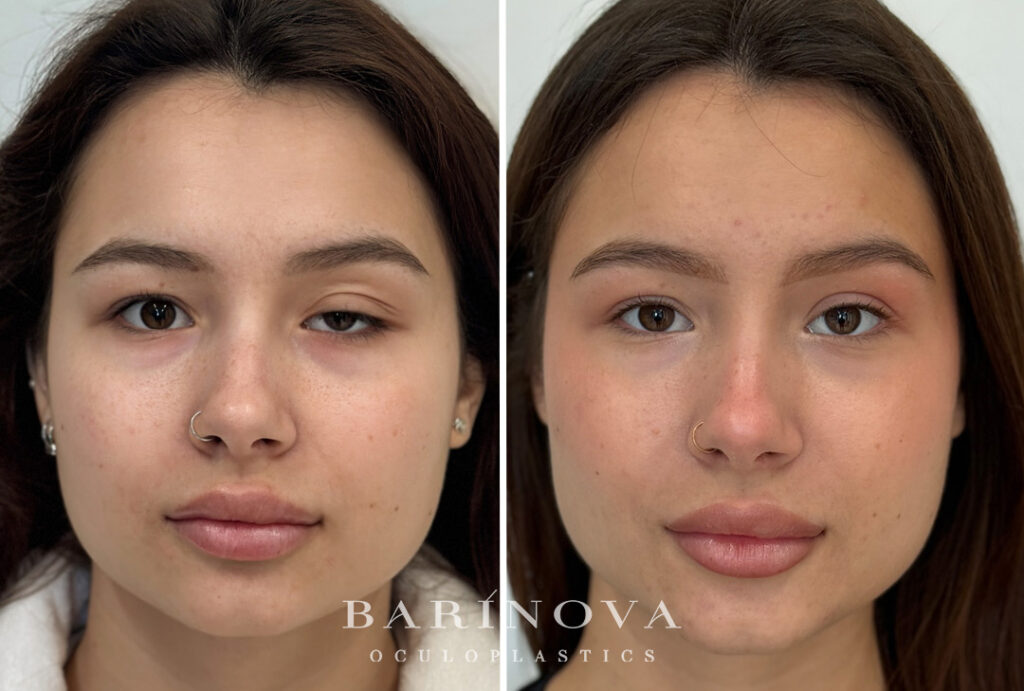
Upper Eyelid Ptosis Correction in a Teenager
-
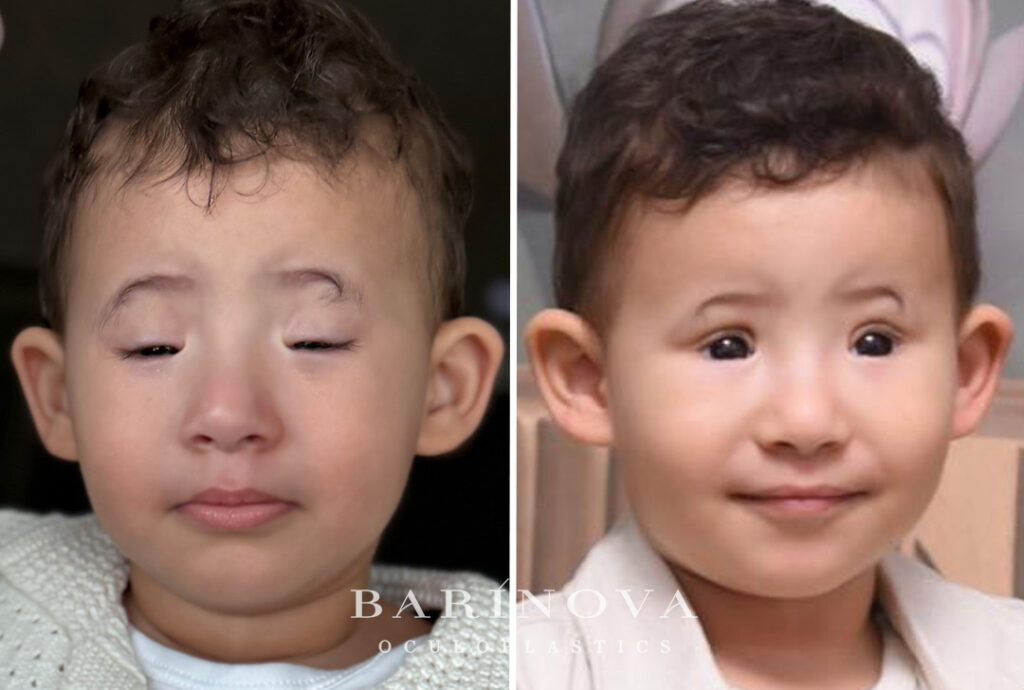
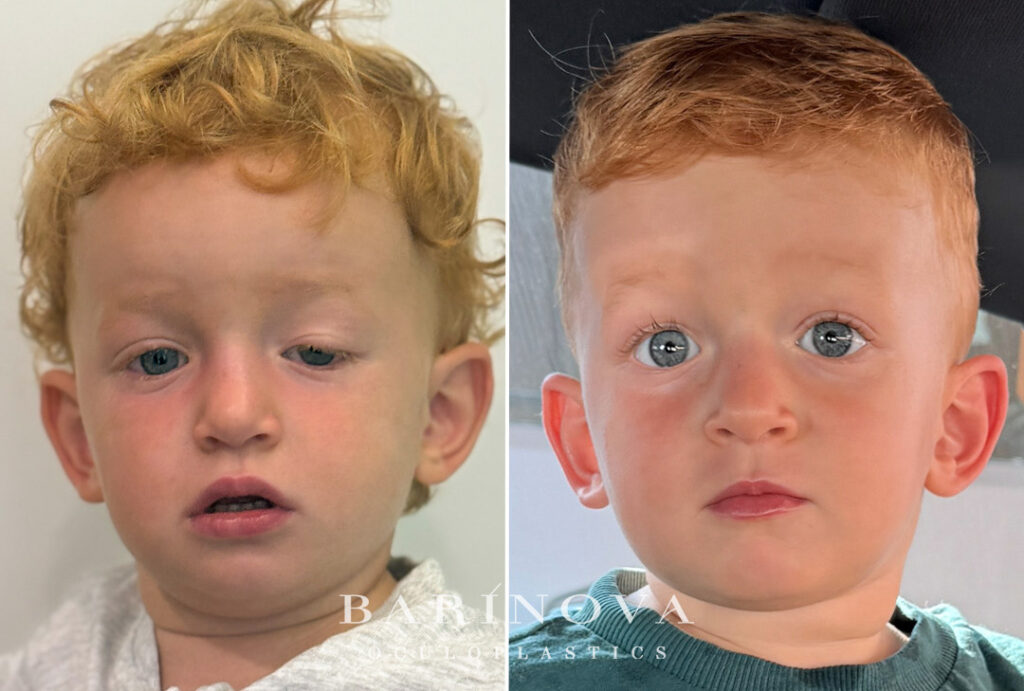
Ptosis Correction in Blepharophimosis Syndrome (BPES)
-
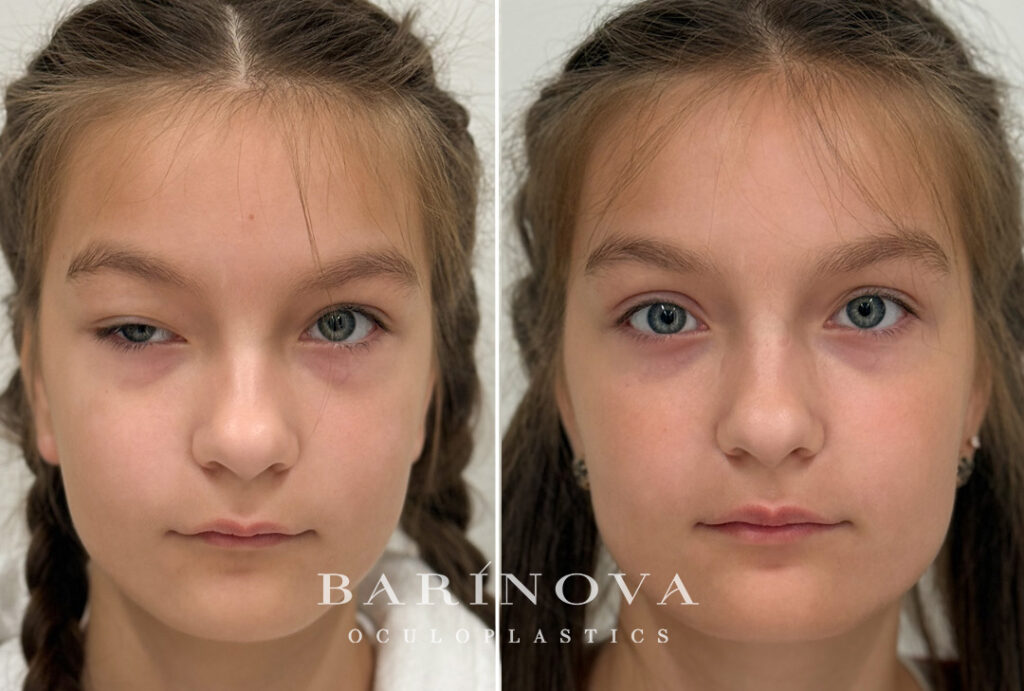
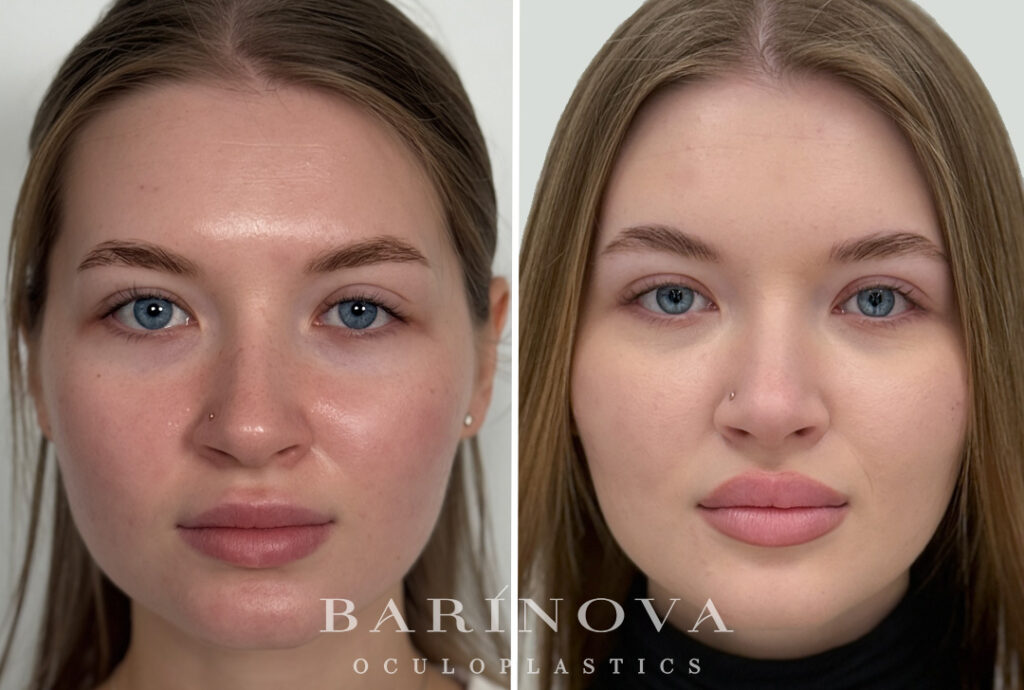
Upper Eyelid Ptosis Correction in a Girl
-
Ptosis Correction in a Young Patient
-
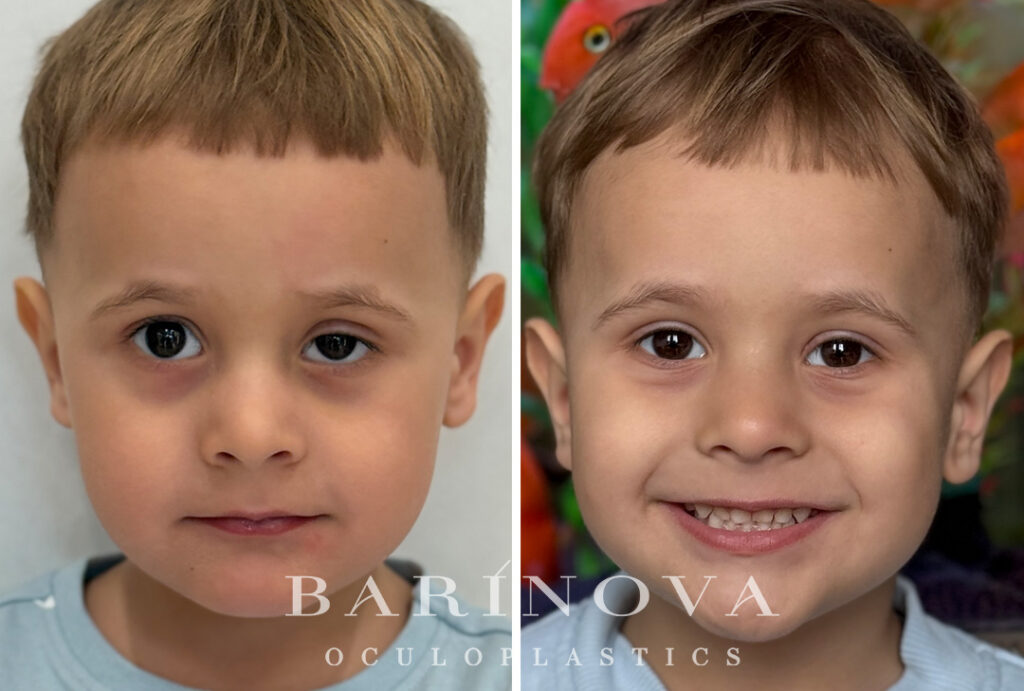
Ptosis Correction in a Toddler
-
Upper Eyelid Ptosis Correction in an Adult Patient
-
Ptosis Correction in a Child
-

When ptosis surgery is needed
Upper eyelid ptosis can be congenital or acquired. Acquired ptosis may be caused by age-related changes, injuries, previous surgery, dysfunction of the eyelid-lifting muscle or neurological conditions.
Not every case of ptosis needs immediate surgery. First it is important to find the cause, assess the degree of drooping and the function of the muscle that lifts the eyelid.
Surgical ptosis correction may be recommended if:
- the drooping eyelid partly covers the pupil and limits the visual field;
- there is marked asymmetry between the upper eyelids;
- congenital ptosis affects visual development or function;
- ptosis developed after an injury or previous surgery;
- the patient constantly tenses the forehead muscle to compensate for the drooping eyelid;
- the change in eyelid position significantly affects the look of the eyes and quality of life.
Revision ptosis surgery is especially complex, as the tissues have already been altered by previous surgery. Such cases require a particularly precise analysis of eyelid anatomy and function.
Methods of upper eyelid ptosis treatment
There is no universal ptosis operation. The correction method is chosen individually depending on the cause of drooping, the degree of ptosis and the strength and function of the upper eyelid-lifting muscle, the levator.
The main goal of surgery is to restore the correct upper eyelid position while preserving its natural mobility and function as much as possible.
When levator function is sufficient, the muscle may be shortened (resected), which strengthens the lift of the upper eyelid. In some cases other muscle correction techniques are used.
If levator function is significantly reduced or absent, frontalis sling procedures may be used, in which eyelid movement is partly transferred through the forehead muscle.
In some cases ptosis needs combined correction, for example together with blepharoplasty or other eyelid procedures.
The exact surgical technique is determined only after a diagnostic examination. It takes into account not only eyelid height but also levator function, eyeball mobility, the condition of the eye surface, brow position and facial symmetry.
Contraindications
Surgical ptosis correction has a number of medical limitations, including:
- acute inflammatory or infectious diseases of the eyes and eyelids;
- uncontrolled systemic diseases that may increase surgical risks;
- blood clotting disorders;
- severe dry eye syndrome or other significant eye surface diseases;
- pregnancy and breastfeeding, for elective surgery.
Whether surgery is possible is finally decided after a consultation and the necessary tests.
How ptosis surgery is performed
- Consultation and diagnosis. The doctor determines the cause and degree of ptosis and assesses levator strength and function, the position of the eyelids, brows and eyeballs, and the symmetry of the eye opening.
- Pre-operative preparation. If needed, the patient has additional examinations and tests to assess general health and rule out contraindications.
- Anaesthesia. The type of anaesthesia depends on the patient’s age, the complexity of surgery and the technique. Where appropriate, the surgery may be performed under local anaesthesia, which lets the surgeon assess eyelid height and contour while the patient opens their eyes. In children, surgery is usually performed under general anaesthesia.
- Eyelid position correction. The surgeon performs the chosen technique (levator correction or frontalis sling) and checks the height, contour and symmetry of both eyelids.
- Completion. Fine sutures are placed, usually in the natural crease of the upper eyelid.
Recovery after surgery
In the first days after surgery, swelling, bruising and a feeling of dryness or tightness around the eyelids are possible. How pronounced they are depends on the extent of surgery and the patient’s individual features.
Sutures are removed when the surgeon decides. Eyelid height and contour stabilise gradually as the swelling subsides, so the final result is assessed after a few months.
After surgery the doctor schedules follow-up visits and gives recommendations on eye care, physical activity and visual load.
Our doctor
Ptosis correction is performed by oculoplastic surgeon Anna Barinova. She restores the eyelid position in a way that preserves its mobility and its protection of the eye.
Ptosis consultation
If you have noticed a drooping upper eyelid or eye asymmetry, book a consultation. The doctor will determine the cause of the ptosis and a possible correction method.
Make an appointment
Questions & Answers
How is ptosis different from upper eyelid skin hooding?
In ptosis, the eyelid margin itself droops because of a problem with the eyelid-lifting muscle or its tendon. In hooding, the eyelid margin is in the right position, but excess skin hangs over it. The first needs ptosis correction, while blepharoplasty may be enough for the second. Both conditions can also occur together, so the diagnosis is made at the examination.
Can ptosis be corrected without surgery?
The main treatment for persistent ptosis is surgical correction. If ptosis is related to a neurological or other general condition, the cause must first be investigated and treated. The doctor decides on the approach after the examination.
Is ptosis surgery performed on children?
Yes. Congenital ptosis that covers the pupil can affect visual development, so the child should see a doctor as early as possible. The timing of surgery is decided individually, depending on the degree of ptosis and the state of vision.
How long is recovery after surgery?
The main swelling and bruising usually subside within the first two weeks. The final eyelid position and contour are assessed after a few months, once the tissues have fully stabilised.
Can ptosis come back after surgery?
This is possible, in particular with progressive muscle diseases or age-related tissue changes. Sometimes additional correction of eyelid height is needed. That is why follow-up visits after surgery are important.